An independent salon owner gets booked mostly through free channels: Google, Instagram and rebooking clients before they leave. Marketplaces help fill gaps, but they take up to 35% of a new client's first visit. Then deposits cut no-shows, fair price rises protect your margin, and a few tax dates keep you safe.
That is the whole job in one paragraph, but each part hides some detail. This guide is for UK salons with one to four chairs, including people who rent a chair. Where we have a deeper guide, we link to it rather than repeat it.
Where an independent salon owner's bookings come from
Most bookings come from four places, but three of them cost nothing. So it makes sense to fix those first.
Google Business Profile
When someone searches "hairdresser near me", Google shows local profiles first. Google says it ranks them on relevance, distance and prominence. As an independent salon owner, you cannot change distance, but you can control the other two. Google also says businesses with "complete and accurate info are more likely to show up".
So fill in every field. Add your services, prices, opening hours and real photos. Then add your booking link, so people can book without phoning. Reviews also matter. Google says more reviews and positive ratings can help your local ranking. It also offers a review link or QR code you can share with clients. For example, text it after each appointment.
For an independent salon owner, Instagram is the shop window. After all, clients look at your work there before they book. Therefore, put one booking link in your bio, not three. Then pin a post that shows your prices and how to book. That way, nobody has to message you just to ask.
Rebooking at the chair
This is the cheapest booking an independent salon owner can get, because the client is already in the chair. They are happy, and they trust you. So before they pay, suggest the next date. For instance, say "Your colour will need a refresh in about six weeks. Shall I pop you in?"
Marketplaces fill gaps, but the commission adds up
Marketplaces such as Treatwell, Booksy and Fresha list your salon beside others nearby. That brings new faces, which helps most when you first open. However, an independent salon owner usually pays a fee for each new client a marketplace sends.
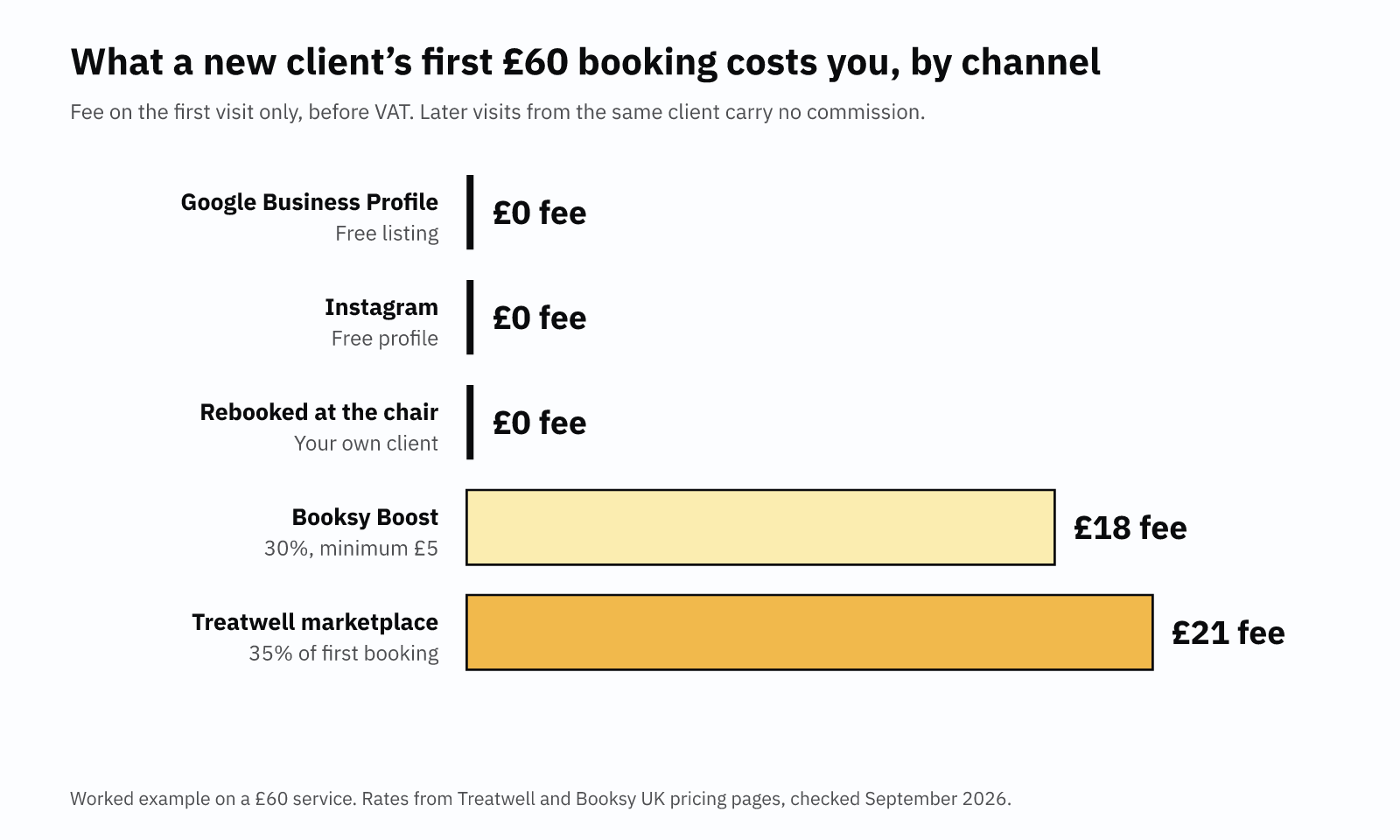
Treatwell publishes 35% commission on first bookings from new marketplace clients. But repeat bookings from those clients carry 0% commission. Meanwhile, Booksy charges £40 a month for one person, plus VAT. Its optional Boost feature then takes a one-time 30% fee, with a minimum of £5. Fresha's pricing page changes by country, so check the fee shown to you. We checked all three pages in September 2026.
So on a £60 first visit, Treatwell's fee is £21. Booksy Boost's fee would then be £18. That can still be worth paying for a client who stays for years. But it is costly for someone who books once and never returns.
So for an independent salon owner, the trick is simple. Use marketplaces for discovery, then move regulars to your own link. Our guide to booking commission fees shows the full maths. And the Real Bill Calculator adds up what your current setup costs each year.
Deposits are the independent salon owner's best defence against no-shows
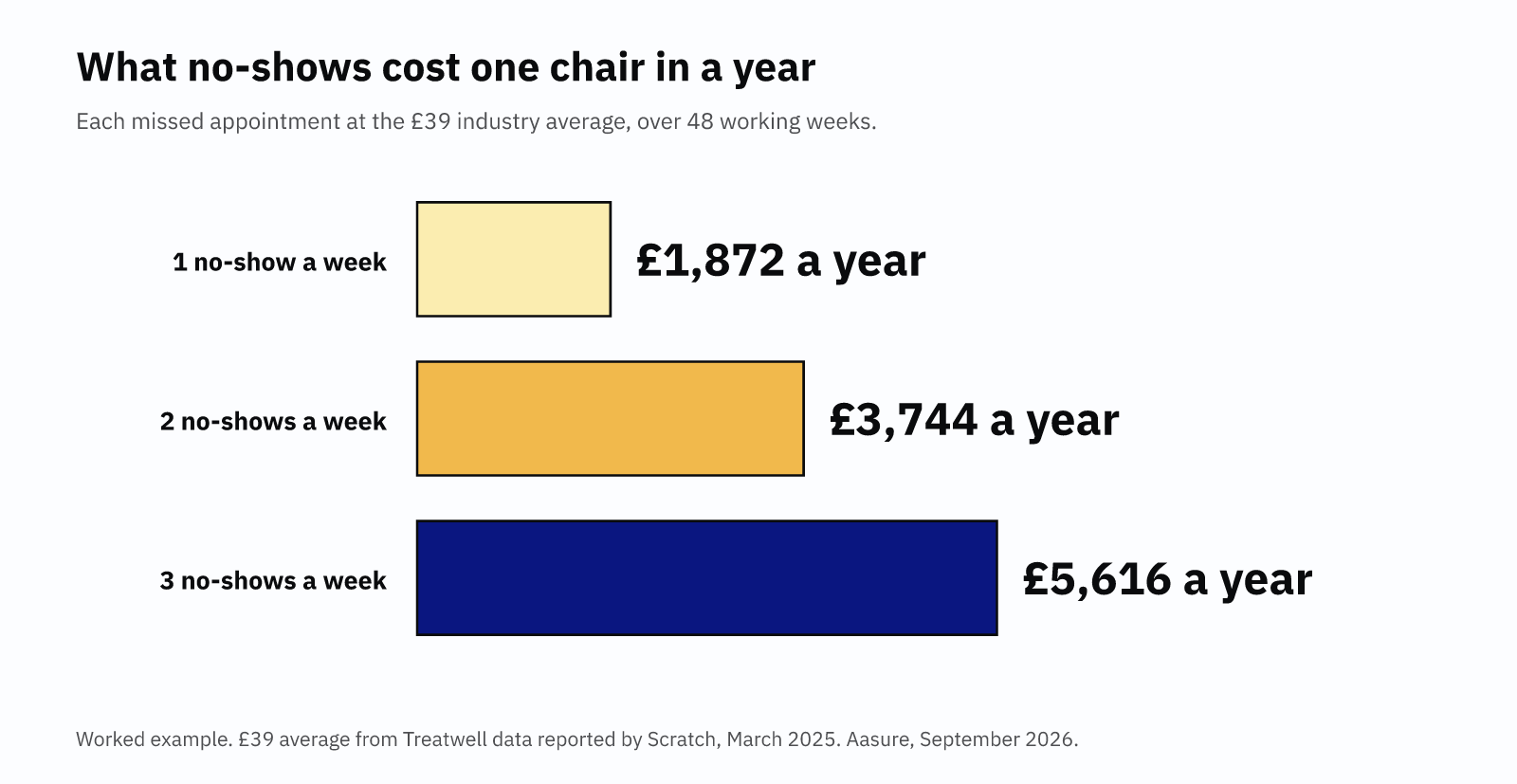
A no-show hurts because you cannot resell the empty chair. According to Treatwell data reported by Scratch, each missed appointment costs a salon £39 on average. The same report says 17% of salons now require pre-payment. It adds that pre-payment has cut their no-shows by half.
Fresha analysed over three million summer bookings, as reported by Professional Beauty. It then found that 3.8% of all appointments were no-shows. Hair salons came in at 3.16%, while barbershops were far higher at 21.16%.
So what should an independent salon owner do? First, take a deposit on long or costly services, such as colour or extensions. Next, send a reminder the day before. In an NHS trial with the Behavioural Insights Team, a clear text cut missed appointments from 11.1% to 8.4%. Finally, write your rules down and show them at booking.
Keep any fee fair, because the Competition and Markets Authority says cancellation charges should reflect the business's real loss. Our no-show policy guide has wording you can copy. You can also put your own numbers into the No-Show Cost Calculator.
The financial strain on the UK’s hair and beauty industry is greater than ever, and no-shows are exacerbating the crisis.
Raise your prices with notice, not an apology
Almost every independent salon owner dreads the price-rise message. But costs rise every year, so your prices have to rise too. In fact, you are not alone in this. In an NHBF survey from early 2026, 41% of hair and beauty businesses said they had to increase prices. The NHBF added that "businesses are not putting prices up lightly".
Good timing also makes a rise easier to accept. The NHBF suggests raising prices each April, at the start of the financial year. It also says to give at least six weeks' notice. In addition, it reminds owners to charge enough to cover costs and make a profit.
Keep the message short and calm. After all, an independent salon owner does not need to justify every penny. Here is a version you can adapt.
Hi [first name], a quick heads-up from [salon name]. From [date], some of my prices are changing. A cut and finish will be [new price], and colour starts at [new price]. Any appointment you have already booked stays at the current price. Thank you for supporting a small, independent salon. See you soon!
This works because it gives a date, the new prices and a promise about existing bookings. As a result, clients have nothing to argue about. To check your prices cover your costs, try the free Real Pricing Calculator.
Getting paid: card fees and invoices
Most clients now pay by card. So as an independent salon owner, you pay a small fee on almost every service. For example, SumUp charges 1.69% on in-person payments on its pay-as-you-go plan. It then charges 2.5% on online payments. By comparison, Square charges 1.75% for UK cards in person. Online, it charges 1.4% plus 25p. On a £60 service, that works out at roughly £1 each time.
That sounds tiny, but it adds up. At 25 clients a week, it comes to about £1,200 a year. So compare rates once a year, and count the fee when you set prices. Our guide to a POS system for salons explains what else to look for.
Meanwhile, some work needs an invoice instead, such as bridal parties or corporate events. In that case, GOV.UK lists what an invoice must include. It needs a unique number, your details and the customer's details. It also needs a description, the supply date, the invoice date and the total owed. Send it on the day, and state a clear payment date.
Tax basics every independent salon owner should know
First, check your status. When you rent a chair, you are usually self-employed. GOV.UK's hair and beauty guidance lists the signs. For instance, you "decide how much you charge" and you bring your own clients. Also, you do not earn money if you have no appointments.
If you are newly self-employed, register for Self Assessment in time. The deadline is 5 October after your first tax year ends. For example, that date was 5 October 2026 for the 2025/26 year. After that, an independent salon owner should keep every receipt. HMRC often lets you claim products, tools, training and software as allowable expenses. As a result, your tax bill falls.
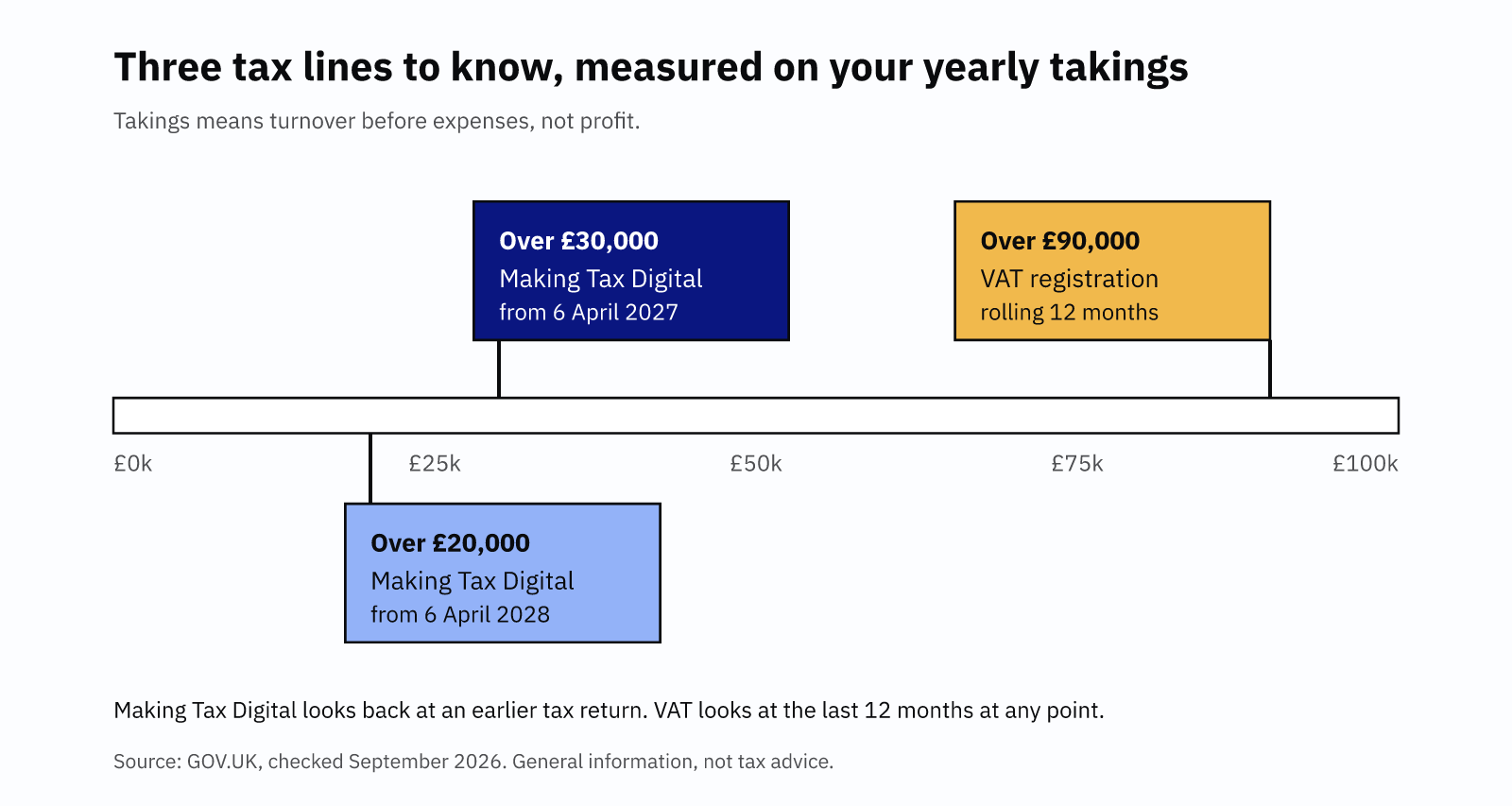
Then two thresholds matter most as you grow. The first is Making Tax Digital. It applies to sole traders with qualifying income over £30,000 from 6 April 2027. Then the line drops to £20,000 from April 2028. Our guide to Making Tax Digital for sole traders explains the quarterly updates.
The second is VAT. You must register when your taxable turnover over the last 12 months goes over £90,000. That is a rolling total, not a tax-year total. So check it every month once you pass about £75,000. At the standard 20% rate, VAT is a big change for an independent salon owner.
This section gives general information, not tax advice. For your own case, ask an accountant or check GOV.UK.
One system or seven separate tools
A typical independent salon owner runs bookings in one app, payments in another and invoices in a spreadsheet. Each tool costs a little, and each one also needs checking. Our look at salon management software counts up the seven tools most salons pay for.
Aasure is one option that puts booking, client records, reminders and email marketing on one flat monthly fee. It also takes no commission on your own clients. However, it has no marketplace, so it will not send you new clients. It does not take card payments or deposits yet, though they are on the way. It also does not file anything with HMRC. If you are an independent salon owner comparing options, our round-up of UK salon software covers nine platforms honestly. There is also a Fresha alternative comparison. And if you do decide to move, here is how to switch booking software without losing clients. You can see how Aasure works for independent salons as well.
- Check your Google profile. Reply to new reviews and update any photos.
- Count your no-shows. If they are rising, widen your deposit rule.
- Check your rebooking rate. Aim to book most regulars before they leave.
- Review your marketplace fees. Move repeat clients to your own link.
- Add up your rolling 12-month takings. Watch the £90,000 VAT line.
- File your receipts. Log expenses now, not in January.
Common questions
Where should an independent salon owner find new clients first?
Start with the free channels, because they cost nothing per booking. Complete your Google Business Profile and ask happy clients for reviews. Then keep Instagram up to date with a booking link. Finally, rebook each client before they leave the chair. Marketplaces can fill gaps, but they charge 30% to 35% on a new client's first booking.
Can I charge a deposit for salon appointments?
Yes. Many salons take a deposit at booking, especially for long colour or extension work. However, any fee you keep must be fair. The CMA says a cancellation charge should reflect your real loss. So tell clients the rule before they book, and keep it in writing.
When does a salon owner need to register for VAT?
You must register when your taxable turnover goes over £90,000 in any rolling 12 months. That counts takings rather than profit. So check the total every month, not just at your year end. If you rent a chair, your takings are usually your own, not the salon's.
Does Making Tax Digital apply to salon owners?
It applies to sole traders over the threshold. From 6 April 2027, that means over £30,000 of yearly takings. Then from April 2028, the line drops to £20,000. You send short updates every three months through compatible software. But these rules do not cover a limited company.
See what empty chairs really cost you.
The free No-Show Cost Calculator turns your missed appointments into a yearly figure. It takes about a minute, and it shows what a deposit rule could save.
Work out your no-show cost